



Quality Eye Care in Superspecialist Hands
VEDANTA NETRALYA EYE HOSPITAL • GHAZIABAD
Cataract Surgery in Ghaziabad – Advanced Phaco Surgery with Premium Lens Options
Motiyabind (cataract) operation by experienced eye surgeons: careful assessment, stitchless phaco surgery with an advanced machine, and the right lens chosen for your eyes, lifestyle and budget.
✔ Stitchless phaco surgery ✔ Monofocal, toric, EDOF and multifocal lenses ✔ Same-day discharge ✔ Insurance and cashless support
Book Your Cataract Surgery Appointment
you are above 60 years and difficulty in vision, Get appointment from Eye Doctor, it might be cataract . best results are achieved when done at right time with right assessment

Book a Cataract Surgery Appointment
Book a cataract check-up and surgery consultation at Ghaziabad, Greater Noida West or Hapur.
Know about cataract surgery
What Is Cataract and Why Is Cataract Surgery Required?
A cataract (motiyabind) is the clouding of the eye’s natural lens. It usually develops slowly with age, but diabetes, long use of steroid medicines, eye injury, smoking and strong sun (UV) exposure can bring it earlier. Eye drops, tablets or exercises cannot remove a cataract.
Surgery is required because, as the lens becomes more cloudy, glasses stop helping, daily work becomes difficult and, if ignored, the cataract becomes hard, which makes surgery and recovery tougher. The only treatment is a small operation in which the cloudy lens is removed and replaced with a clear artificial lens (IOL).
Common signs of cataract
Blurred, cloudy or dim vision
Glare and halos around lights, trouble driving at night
Colours look faded or yellow
Glasses number keeps changing or new glasses do not help
Difficulty reading, watching TV or recognising faces
Double vision in one eye
Right time for surgery
When Should Cataract Surgery Be Done?
Cataract surgery is not an emergency, and there is no need to wait for winter or for the cataract to become ‘ripe’. Your surgeon will usually advise surgery when:
Daily life is affected
Reading, cooking, driving, using the phone or recognising faces has become difficult.
Glasses no longer help
New glasses do not give clear vision, or the glasses number keeps changing.
Cataract is at an operable stage
Your eye surgeon finds it is the right time. Waiting too long can make the cataract hard and increase risk and recovery time.
Not sure whether you need surgery now? A cataract check-up tells you exactly how advanced it is.
Best Reults achieved with right assessment and right time
Most important step
Assessment Before Cataract Surgery – The Most Important Step
A careful assessment decides how safe your surgery will be and how well you will see afterwards. Before cataract surgery we check:
Detailed eye examination
Vision test, slit-lamp check of the cornea and the grade of cataract, and eye pressure.
Biometry and keratometry
Eye length and corneal curve are measured to calculate the exact power of your lens.
Retina and optic nerve check
A dilated examination finds diabetic, macular or glaucoma problems that can limit your final vision.
Cornea and dry-eye check
A healthy surface matters for accurate measurements and for premium lenses.
General health clearance
Blood pressure, blood sugar and other illnesses are checked, with physician clearance where needed.
Your lifestyle and vision goals
Work, computer use, driving, reading and hobbies guide which lens will suit you.
Type of surgery
Phaco Surgery with Advanced Machine and Implantable Lens
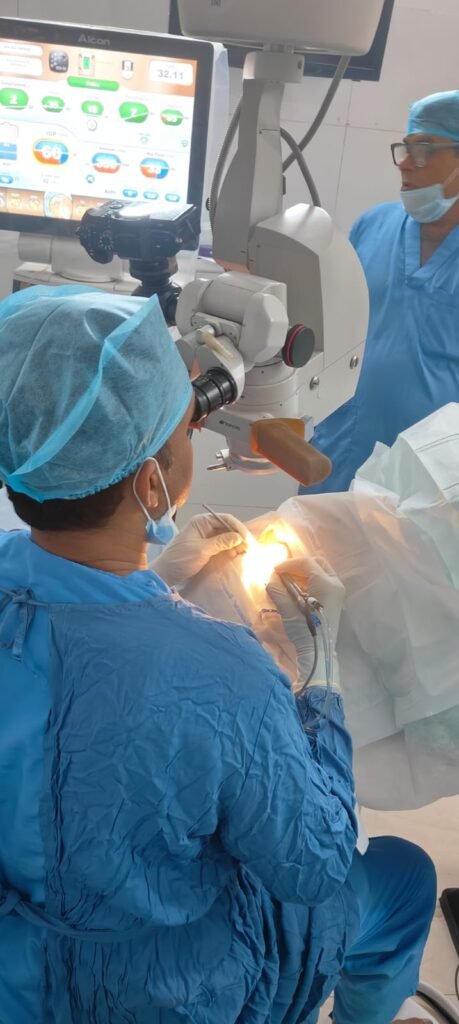
Phacoemulsification (phaco) is the gold standard for cataract surgery. Through a tiny cut, the cloudy lens is broken up with ultrasound by an advanced phaco machine and gently removed. A foldable intraocular lens (IOL) is then implanted in its place. You are awake, numbing drops are used and most patients go home the same day.
✔ Small-incision, stitchless surgery
✔ Advanced phaco machine
✔ Foldable implantable lens (IOL)
✔ Day-care surgery with next-day check-up
Laser-assisted (femto, often called ‘robotic’) cataract surgery is an option some patients ask about which isvery minimal part and no robotic surgery in cataract surgery and with no differnce in result, recovery, precision till now.Main procedure is same phacoemuslification with advanced machine with premium lenses. Your surgeon will tell you honestly whether it adds any benefit for your eye. For most eyes, the lens you choose matters more than the laser.

Types of lenses (IOLs)
Types of Cataract Lenses – Which One Is Right for You?
Each lens type has its own benefit. Here is a simple guide to discuss with your eye doctor.
Monofocal lens
Clear vision at one distance, usually far. Reading glasses are needed.
Best for: simple, reliable and budget-friendly vision.
Toric lens
A monofocal lens that also corrects astigmatism (cylinder number) for sharper distance vision.
Best for: eyes with a cylinder number.
EDOF lens
Extended depth of focus: smooth far and intermediate vision (computer, TV, dashboard); light reading glasses may be needed.
Best for: active people who work on screens and drive.
Multifocal and trifocal lens
Far, middle and near vision, so most people need glasses only rarely. Some notice halos at night at first.
Best for: healthy eyes and a strong wish to be free of glasses.
Toric multifocal (premium) lens
Corrects astigmatism and gives near-to-far vision in one lens.
Best for: glasses independence with astigmatism.
Our best suggestion for you
There is no single best lens for everyone, and a good lens matters more than laser. With healthy eyes and a wish to be free of glasses, a premium lens (EDOF, multifocal or toric) is worth considering. If the retina or cornea is not perfectly healthy, or the budget is limited, a quality monofocal lens (with toric if needed) gives safe, reliable vision. Your surgeon will confirm the best choice for you after your assessment.
Cost of cataract surgery
Cataract Surgery Cost in Ghaziabad
The cost depends mainly on the lens, the method and the condition of your eye. Typical ranges per eye:
Phaco with monofocal IOL
₹15,000 – ₹30,000
Phaco with multifocal or toric IOL
₹40,000 – ₹80,000
Premium lenses (EDOF, trifocal, toric multifocal)
₹90,000 – ₹2,00,000
These are indicative ranges. After your check-up you receive a clear written package with no hidden charges. Most health insurance policies and schemes such as Ayushman Bharat cover cataract surgery, depending on your policy and lens; our team helps with the paperwork.
Why Vedanta
Why Choose Vedanta Netralya for Cataract Surgery in Ghaziabad?
Experienced eye surgeons
Highly experienced eye surgeons with thousands of successful surgeries.
Latest technology and equipment
Modern diagnostics, an advanced phaco machine and quality lenses for precision and faster recovery.
Personalised treatment plan
Every plan is matched to your vision needs, lifestyle and preferences.
Affordable, transparent pricing
Clear packages with no hidden costs, and help with insurance claims.
Exceptional patient care
Comfort during surgery, fast recovery and dependable aftercare with next-day check-up.
AIIMS-trained surgical leadership
Experienced specialists you can ask questions.
Thousands of surgeries
A proven record in cataract surgery.
Day-care, next-day check-up
Go home the same day, review the next day.
Retina specialist at the same centre
Extra safety for diabetic and complex eyes.
Our specialists
Meet the eye specialists
Click a doctor's name or photo to open their profile, or send a consultation request on WhatsApp.
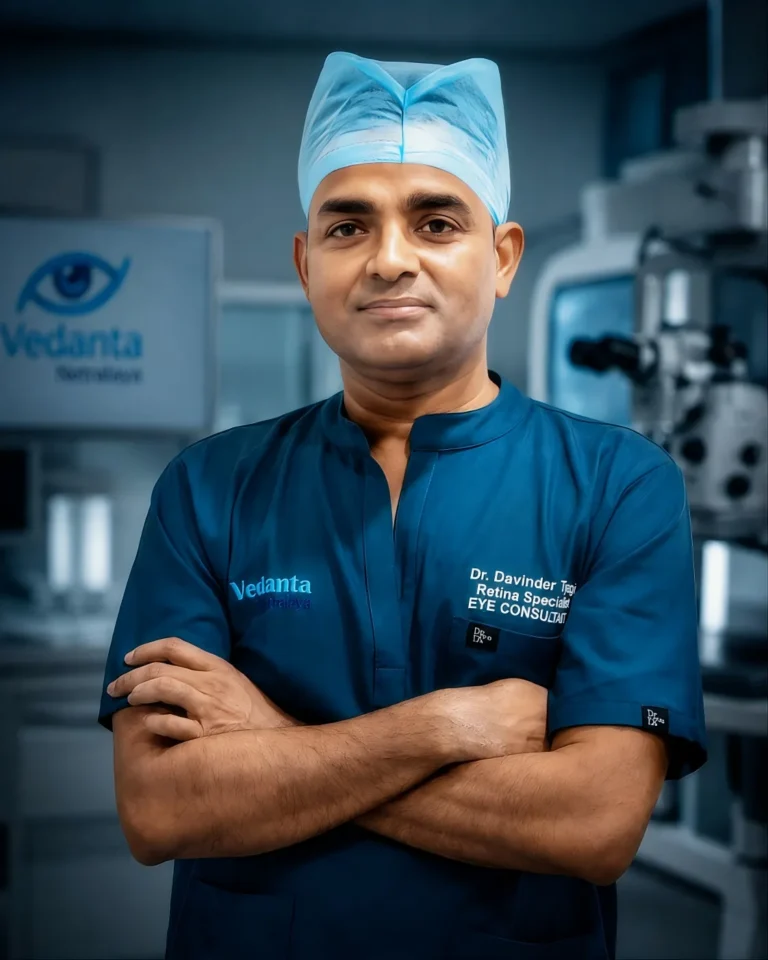

Dr. Parag Tyagi
LASIK, Refractive, Squint & Oculoplasty
MS (Ophthalmology), FICO; AIIMS Oculoplasty & Squint training
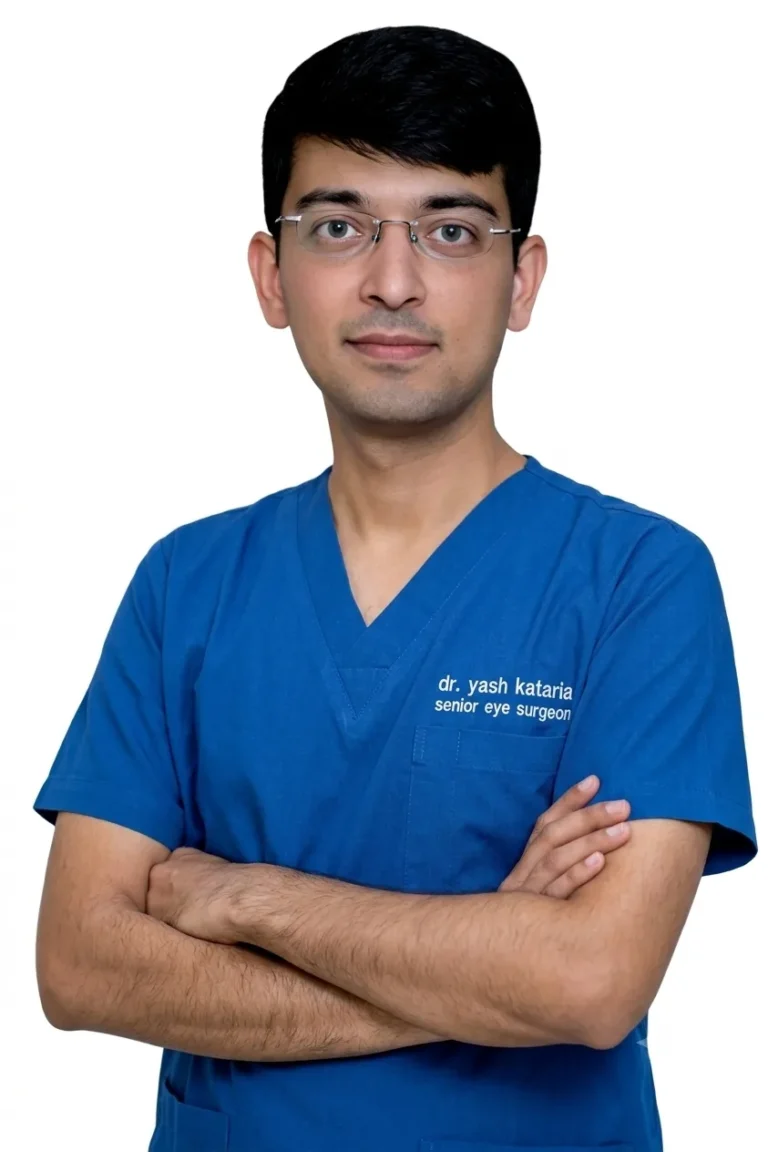
Know more doctors



Our centres
Our Centres for Cataract Surgery
Ghaziabad (RDC, Raj Nagar), Greater Noida West (Gaur City) and Hapur.
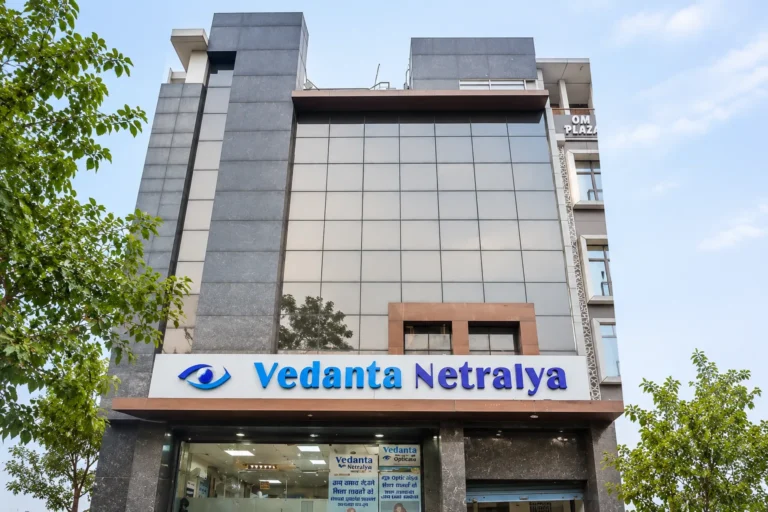
Ghaziabad • RDC Raj Nagar
C-16 RDC, near Yes Bank, Raj Nagar, Ghaziabad, UP 201002
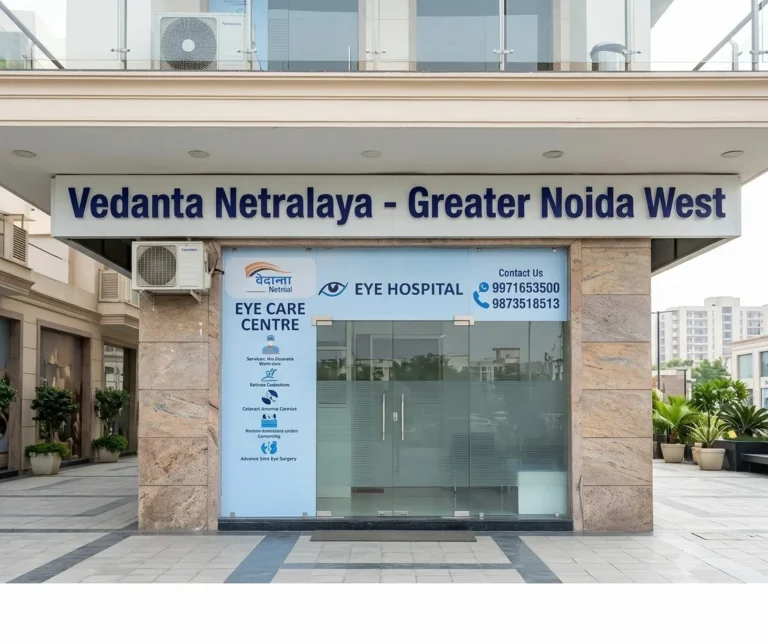
Greater Noida West • Gaur City
Galaxy Diamond Plaza, Greater Noida West, Uttar Pradesh 201009

Hapur • Meerut Road
Meerut Road, Prem Nagar, Hapur, Uttar Pradesh 245101
Google reviews • Cataract surgery
What Our Cataract Surgery Patients Say
★★★★★
“It was genuinely such a nice experience with Vedanta when my mother got operated for her cataract eye and all staff was very humble and guided us through all the process.”
Sandeep Tyagi · Google review · Cataract surgery
★★★★★
“I got cataract surgery operated of my wife which was very difficult because of her lung condition. I got operated here and got full satisfaction. Very much satisfied with the hospital doctors and staff.”
Payal Batta · Google review · Cataract surgery
★★★★★
“Getting my mother’s cataract surgery in Vedanta Netralaya Ghaziabad by Dr. Davinder Tyagi. Surgery went wonderful and the perfect vision.”
Ankur Agarwal · Google review · Cataract surgery
★★★★★
“I got both my eyes cataract surgery done in Vedanta Netralya. After surgery my vision is good. Highly recommended.”
Vishnu Saxena · Google review · Cataract surgery
★★★★★
“I got operated for cataract surgery for a complicated case by Dr. Davindra Tyagi and got satisfactory result with complete recovery of vision.”
Dhananjay Kumar Rai · Google review · Cataract surgery
★★★★★
“I had got both my eyes cataract surgery and got perfect, wonderful vision. Thanks to doctors and team.”
Uday Krishna Kohli · Google review · Cataract surgery
Cataract surgery patient testimonial
Which lens should you choose before cataract surgery? Ask our team on WhatsApp 98711 15482 or call 98735 18513.
know doctor suggestion- which lens to choose
Ready for Cataract Surgery? Book Your Appointment
Choose your centre and tell us you need cataract surgery. Our appointment team will contact you. Please do not enter detailed medical records.
Book a Cataract Surgery Appointment
Book a cataract check-up and surgery consultation at Ghaziabad, Greater Noida West or Hapur.
Cataract surgery FAQs
Frequently Asked Questions About Cataract Surgery in Ghaziabad
What is the cost of cataract surgery in Ghaziabad?
It depends on the lens and method. At Vedanta Netralya, phaco surgery with a monofocal lens is usually ₹15,000–₹30,000 per eye, multifocal or toric ₹40,000–₹80,000, and premium lenses (EDOF, trifocal, toric multifocal) ₹90,000–₹2,00,000. You receive a written package after your check-up.
Motiyabind operation kitne din mein theek hota hai? How long is recovery?
Most people see better within 24–48 hours and return to light daily work in 2–3 days. The eye heals fully in 2–4 weeks if you use the eye drops and attend your check-ups.
Is cataract surgery painful?
No. Numbing drops are used, so you feel only light pressure or touch. A mild gritty feeling for a few days is normal and settles with the drops.
When should cataract surgery be done?
When blurred vision interferes with daily work, glasses no longer help, or your surgeon finds the cataract has reached an operable stage. It is not an emergency, but waiting too long can make the cataract hard and recovery slower.
Which lens is best for cataract surgery?
There is no single best lens for everyone. Monofocal is reliable and economical; toric corrects astigmatism; EDOF and multifocal or trifocal lenses reduce dependence on glasses. Your surgeon recommends one after assessing your eye, lifestyle and budget.
Is laser or robotic cataract surgery better than phaco?
Phaco is the gold standard and gives excellent results. Laser-assisted (femto, often called robotic) surgery costs more and for most eyes does not give better vision; the choice of lens usually matters more.
How long does cataract surgery take?
The operation itself usually takes about half an hour or less. Plan for 2–3 hours at the hospital in total, because tests are done before and after surgery.
Can both eyes be operated on the same day?
We normally operate one eye at a time. If both eyes need surgery, the second eye is usually done after about 15 days.
Is cataract surgery covered by insurance or cashless?
Most health insurance policies cover cataract surgery partially or fully, and government schemes such as Ayushman Bharat may also cover it. Coverage depends on your policy, hospital and lens, so our team checks your policy and helps with the paperwork.
I have diabetes or high BP. Can I have cataract surgery?
Yes, if your sugar and BP are under control. Diabetic patients need a retina check before surgery, and our retina specialist and cataract surgeon work at the same centre.
What tests are done before cataract surgery?
Eye and vision examination, keratometry and biometry to calculate lens power, a dilated retina check, blood sugar and BP, and physician clearance if needed.
When can I resume work, reading and driving after surgery?
TV and reading after 24–48 hours, office and computer work after 2–3 days, kitchen work in 5–7 days, and driving after about a week once your vision is stable and your doctor agrees.
Can a cataract come back after surgery?
No, the cataract itself cannot return. Some patients later develop clouding of the lens capsule (posterior capsule opacification), which is treated with a quick laser procedure.
Can cataract be treated with eye drops or medicines?
No. Eye drops, tablets or exercises cannot remove a cataract. Surgery to replace the cloudy lens is the only treatment.
Will I need glasses after cataract surgery?
It depends on the lens. With a monofocal lens you will usually need reading glasses; EDOF, multifocal and trifocal lenses reduce the need for glasses. Your surgeon will explain what to expect for your eyes.